
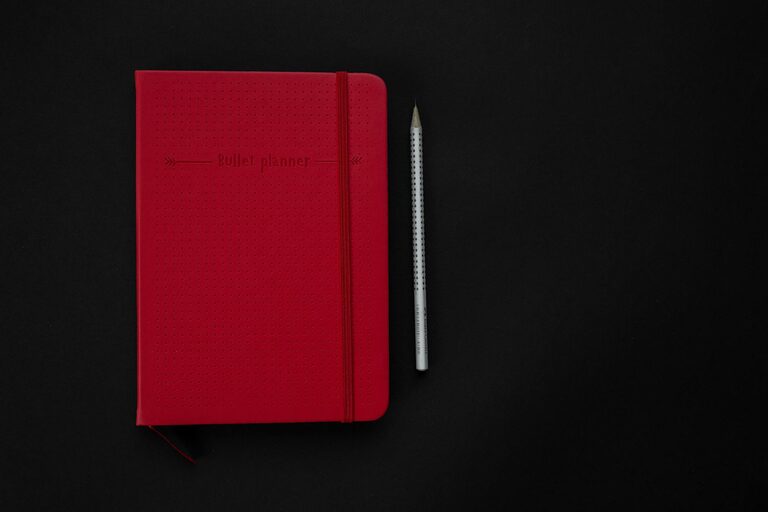
Bullet journaling has become a popular and effective way to organize daily tasks, set goals, and express creativity. Whether you’re looking for a simple planner or a creative outlet, a bullet journal offers flexibility tailored to your needs. This beginner guide will walk you through the essentials of bullet journaling and help you start your own.
What Is a Bullet Journal?
A bullet journal, often called a “BuJo,” is a customizable and analog system developed by Ryder Carroll. It combines elements of a planner, diary, to-do list, and sketchbook. Unlike traditional planners, it is completely flexible—you create the sections and content that suit your life.
The core idea is to use short, bulleted lists and symbols to quickly capture and organize tasks, events, and notes. This method helps you stay organized and mindful without feeling overwhelmed.
Materials You’ll Need to Get Started
Before you begin, gather a few basic supplies:
– Notebook: Any notebook will do, but many prefer dotted or grid notebooks for flexibility.
– Pen: Choose a pen that feels comfortable. Some like fine liners for neat writing.
– Ruler (optional): Helpful for drawing lines and creating layouts.
– Colored pens or markers (optional): For decoration and color coding.
You don’t need fancy or expensive tools—just start with what you have.
Setting Up Your Bullet Journal
Once you have your materials, it’s time to set up the essential sections.
1. Index
The index serves as a table of contents. Reserve the first two to four pages for this. As you fill your journal, note the page numbers and topics here to find information easily.
2. Key
Create a key or legend to explain the symbols you’ll use. Common symbols include:
– • (dot): Task
– ◦ (circle): Event
– – (dash): Note
– X: Completed task
– > (arrow right): Task migrated to the next day
– < (arrow left): Task scheduled for the future
Feel free to adapt symbols that work best for you.
3. Future Log
The future log is a yearly overview where you jot down important dates, appointments, and goals for upcoming months. Divide a double page into sections for each month.
4. Monthly Log
At the start of each month, set up a monthly log with two parts:
– Calendar page: Write the days of the month vertically with space to add events.
– Task page: List monthly goals and to-dos.
5. Daily Log
This is where the bullet journaling method shines. Each day, create a list of tasks, events, and notes. Use your symbols from the key to mark their status throughout the day.
Tips for Bullet Journaling Success
Keep It Simple at First
It’s easy to get caught up in intricate designs and layouts. For beginners, focus on functionality over decoration. Build your system gradually; add artistic elements as you become comfortable.
Customize to Fit Your Needs
Your bullet journal is entirely yours. You might want to add habit trackers, gratitude logs, meal plans, or workout schedules. Always ask yourself what will make you more organized or mindful.
Use Migration to Stay on Track
At the end of each day or week, review incomplete tasks. Migrate important ones to the next day or month. This habit keeps your system tidy and helps prioritize.
Experiment Freely
Try different page layouts, lettering styles, or color schemes. Some people enjoy adding doodles, washi tape, or stickers to their pages. This creative practice can be relaxing and motivating.
Sample Layout Ideas for Beginners
Here are a few simple layouts you can start with:
Daily Log Example
“`
12 March 2024
• Buy groceries
• Meeting with Sarah at 2 PM ◦
– Call mom
X Finish project report
“`
Habit Tracker
Create a grid with habits on one side and days of the month across the top. Fill in the squares when you complete each habit.
Monthly Goals
– Exercise 3 times a week
– Read 2 books
– Organize workspace
Common Mistakes to Avoid
– Overplanning: Don’t create overly complicated layouts that you can’t maintain.
– Being Too Rigid: Allow flexibility—your system should enhance productivity, not create pressure.
– Comparing Yourself to Others: Everyone’s bullet journal looks different, so focus on what works for you.
Final Thoughts
Bullet journaling is a powerful tool to organize your life, encourage mindfulness, and unleash creativity. The best part is it adapts as your needs evolve. Start simple, keep practicing, and enjoy the process of making your journal uniquely yours. Happy journaling!